

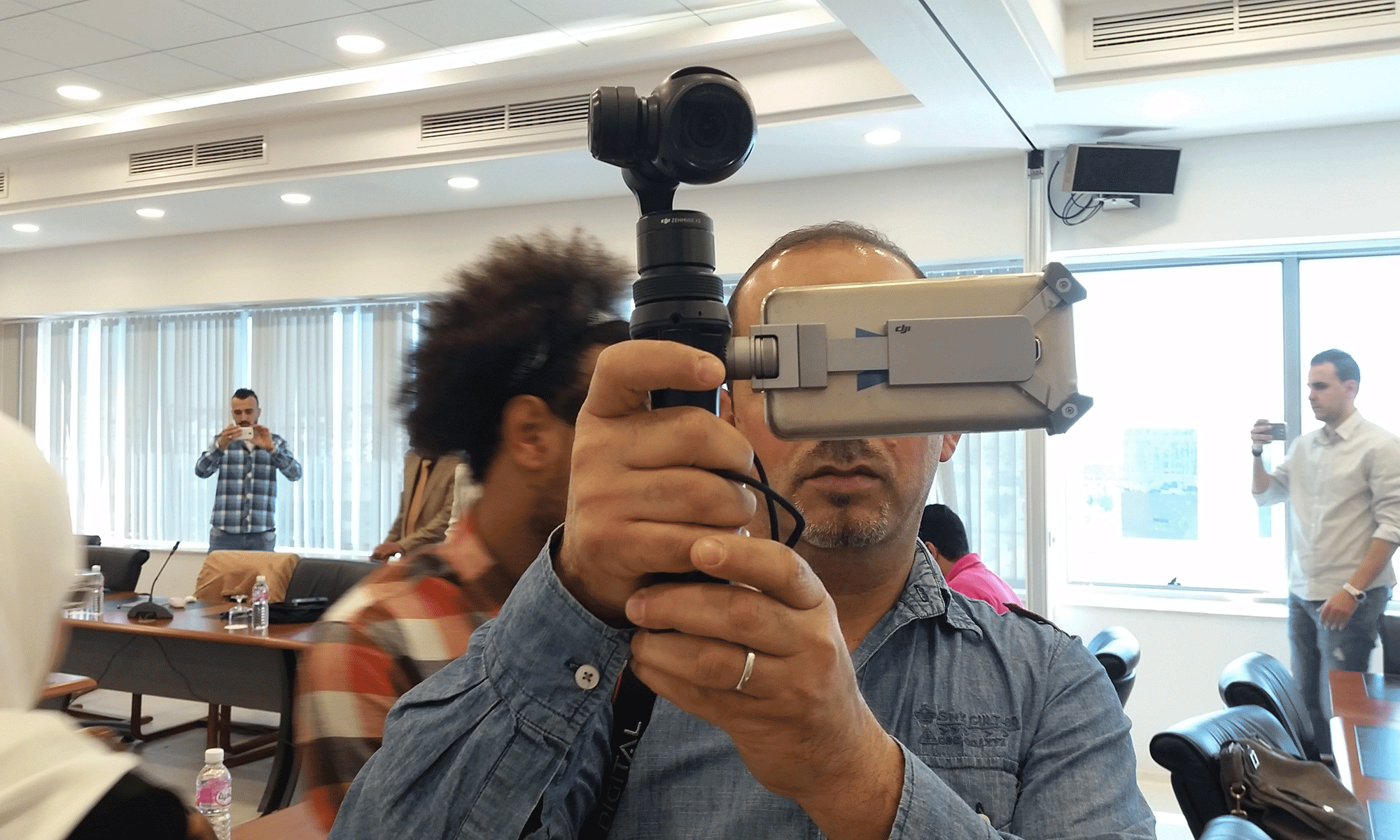
- Identify the potential benefits of using mobile journalism techniques in their own organisation;
- Understand the possible costs and challenges;
- Use basic techniques to report in words, pictures, sound and video from a mobile device such as a smartphone or tablet;
- Devise a plan for using mobile journalism in their own organisation.
Who should follow the course?
Participants are invited from all member organisations which are using, or would like to consider using, mobile phones and tablets to gather and publish news.
Participants may have a background in journalism, production (such as filming or editing) or management and may be, for example:
- Journalists considering using the techniques themselves
- Editors in charge of others who are using, or might use, mobile journalism techniques
- Managers who are considering the impact of mobile journalism on their organisation’s newsgathering, reporting and production.
Prerequisites
Methodology
Although the participants will be dispersed and remote from the trainer, the course has been designed to be interactive, lively and engaging.
- You will be provided with information and advice in text, pictures and video.
- You may be asked to look at material on other web sites.
- You may be required to watch a live lecture or demonstration using web conferencing software or ASBU’s MENOS satellite network.
- From time to time you will be asked to answer questions online. The point of these questions is to help you reflect on the material you’ve been reading and to help you remember the key lessons. They also demonstrate that you are still actively following the course.
- You will be asked to carry out exercises, such as taking photographs or filming video. This will almost certainly require you to leave your office and go out onto location. You may be required to upload some of your material to the internet so it can be reviewed by trainers and/or your colleagues.
- You may be asked to take part in online discussions, such as commenting on material that has been prepared by your colleagues. Your contributions to the discussion may be assessed by a trainer and given a mark that will form part of your final score.
- During the course, trainers may attempt to communicate with you using email, SMS message, email, and social networks. Please make sure you know which systems they intend to use and look out for their messages!
Author
The online course was written by Kevin Burden, who was for 20 years a radio and television reporter, presenter, producer, correspondent, editor and filmmaker with the BBC in England. He was one of the pioneers of multi-skilled working in the BBC, working across radio, television, and online. An enthusiastic amateur photographer, Kevin learned to use a television camera and then started to film and edit his own films for television. He has since produced films for charities, universities and government departments.
Nowadays, Kevin finds himself broadcasting live from events using nothing more than a smartphone, in a way that was until recently only possible for well-resourced and extremely well-funded broadcasters. He’s passionate about exploring opportunities for all to tell their own stories using video, audio and images, armed with nothing more than the phone in their pocket.